


A New Front in the Oil War
As the Ukraine conflict continues and Russia's oil revenues flow unabated, the U.S. is shifting its strategy: rather than targeting Moscow directly, it now aims to increase pressure on its trading partners. According to recent reports, the White House is considering implementing secondary sanctions and high tariffs on countries like India, China, and Brazil, which continue to import Russian crude oil. The goal is clear: cut off Russia’s economic lifeline and force it to the negotiating table.
However, this approach could have unintended side effects. Global oil supply is not a straightforward process but a tightly interconnected network. Many of the states targeted by Washington are not only buyers but also significant exporters of refined fuels, which play a crucial role in the global energy supply.
Summary for 2025:
-
China (~47%) – largest buyer, strategic partner of Russia, buys in large regular volumes.
-
India (~38%) – purchases at steep discounts, partly for further processing and re-export.
-
Turkey (~6%) – acts as a hub intermediary, often a logistics and trade center.
-
EU (~5%) – still imports some Russian oil, often through the so-called shadow fleet or indirect channels to bypass the G7 price cap regime.
Conclusion: Over 85% of Russian exports now go to Asia (China + India), with Europe playing only a minor role. Russia has thus significantly reduced its dependence on the Western market and established a new energy axis toward the East.
India and China hold firm – but pressure rises
On August 7, the White House imposed additional 25% tariffs on Indian goods because New Delhi continues to import Russian oil. Washington made it clear: this is only the beginning. Similar measures could soon target China and other buyers. The message is clear: financing Moscow risks economic sanctions.
Beijing responded calmly, emphasizing that energy policy would continue to follow "national interests." India also remains steadfast: despite temporary adjustments by state-owned refineries, no official ban on Russian crude imports has been imposed. New Delhi views the issue not as a diplomatic matter but as one of energy sovereignty.
The tensions are more than symbolic. Indian refineries play a key role in stabilizing global fuel markets, refining diesel and gasoline from cheap Russian crude and even exporting to Europe. Cutting off this trade would not only affect India or China but shake the foundations of the global energy trade.
What happens if the U.S. pulls the trigger?
If President Trump imposes secondary sanctions or tariffs on countries importing Russian oil, a global supply disruption is likely. Trump argues that shortages could be offset by increased U.S. production – but this is wishful thinking.
U.S. oil producers respond to prices, not political mandates. When crude prices rise, they tend to produce conservatively and sell at high prices, rather than using their reserves to stabilize global supply. Shale oil cannot simply be “turned on,” and no company wants to act as a price policeman when scarcity boosts profits.
The real risk: once a supply gap emerges, it triggers a chain reaction – affecting fuel markets, production costs, monetary policy, and investor sentiment.
Potential developments for Brent crude:
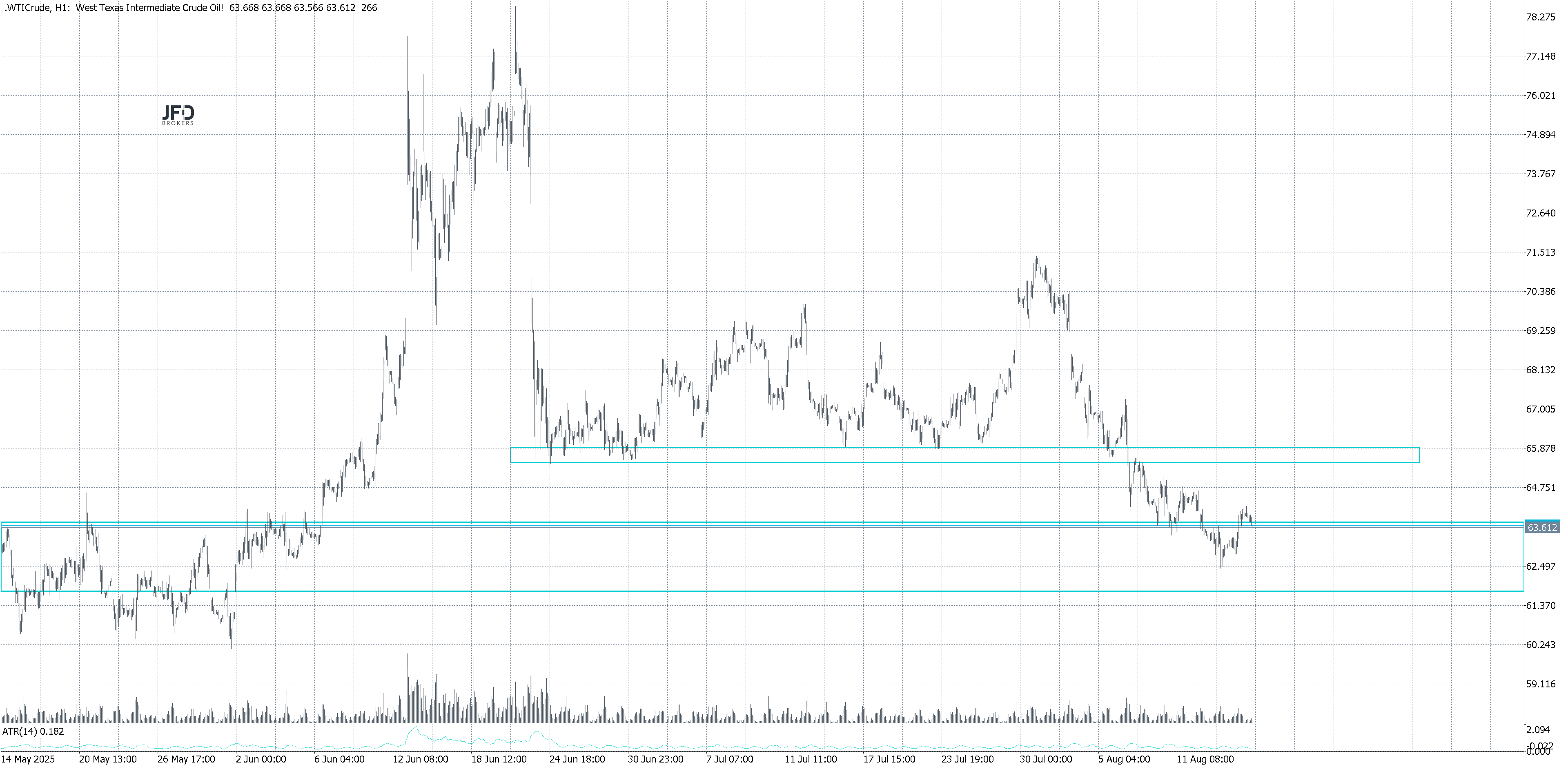
The crude price is approaching a key zone at $65–66, the level that already sparked the June rally. From here, two scenarios are likely:
-
Direct rebound: Support holds, price rises first to the mid-range at $72.6, then toward $79 and possibly $83 (1.272 Fib).
-
Liquidity grab: Short-term drop below $65, followed by a strong recovery with the same upside targets.
The macroeconomic backdrop remains positive in both scenarios: oil supply tightens, India and China face U.S. pressure, and in the short term, there is no alternative to Russian crude.
Technically, the setup is ready: higher-timeframe supports hold, demand zones are being refilled, and a breakout structure is forming. A sustained jump above $74 would make the chart riskier, however.
Initially, increased volatility is expected in Asia. Refineries could start panic stocking even before official sanctions, securing themselves against geopolitical disruptions.
For Europe, this means lower fuel imports and higher inflation risk, especially at a time when the region is seeking economic stability.
Production costs rise worldwide
Rising fuel prices automatically increase transportation and logistics costs – whether by truck, ship, or plane. Manufacturers and retailers face higher raw material costs, shrinking margins. Global supply chains come under renewed pressure: delays and logistical bottlenecks increase. Unlike classic supply-demand inflation, this price rise is politically driven and hard to reverse in the short term.
Inflation rises, rate cuts become unlikely
Higher energy and transport costs push inflation up – precisely when the Fed had considered cutting interest rates. Instead of lowering rates, central banks may be forced to hold them steady or even raise them to temper inflation expectations. Ironically, President Trump calls for lower rates, while his own sanctions may force the Fed to remain cautious.
Growth slows, financial pressure rises
If rates remain high – or even rise – the real economy feels the impact immediately. Companies face double cost pressure: expensive energy and more costly credit. Consumers cut spending, investments stagnate, and sectors like housing, logistics, and manufacturing lose momentum. Economic recovery stalls before it can gain traction. Measures to weaken Russian oil revenues could paradoxically drain energy from the U.S. economy itself.
Financial markets react with risk aversion
Faced with rising inflation and dampened growth prospects, markets enter classic risk-aversion mode: gold rises, the dollar strengthens, equities come under pressure. The U.S. Dollar Index (DXY) bounced from a key demand zone around 97 and could signal a trend reversal.
After weeks of sideways movement below 99–100, the technical structure now points to a possible breakout toward 101.5 and possibly 103.0 – according to the 1.272 Fibonacci extension. This rise reflects growing demand for safe assets, driven not only by interest rate expectations but also by global macroeconomic pressures.
Gold is already reacting to these developments, rising due to inflation and geopolitical uncertainties. At the same time, equities are under pressure as earnings season disappoints and the likelihood of imminent Fed rate cuts fades. In this environment, the strength of the U.S. dollar dominates, not just accompanies, market movements.
Global consequences
The attempt to pressure Russia shows the limits of isolated measures. Russian oil flows will not stop but will merely take longer and riskier routes. Countries like India and China continue to buy oil legally, filling the gap the West itself created.
If the U.S. intensifies tariffs or sanctions, unintended consequences could be larger than planned: fuel shortages in Europe, rising inflation globally…