


Tesla as a Sentiment Driver – Why Wall Street Pays Close Attention
Tesla is far more than just an electric car manufacturer. The company, led by Elon Musk, has become a psychological gauge for the markets – a true sentiment driver whose impact reaches well beyond its own industry.
This isn’t just about Tesla’s market cap or its media presence. It’s the stock’s emotional intensity that makes it so influential. Few stocks polarize as strongly – it’s a battleground for tech optimists, speculators, ESG investors, and short sellers alike.
Tesla symbolizes innovation, future technology, electric mobility, artificial intelligence, and most recently, robotaxis. Positive or negative earnings surprises are often treated as a barometer for market sentiment, especially within growth stocks.
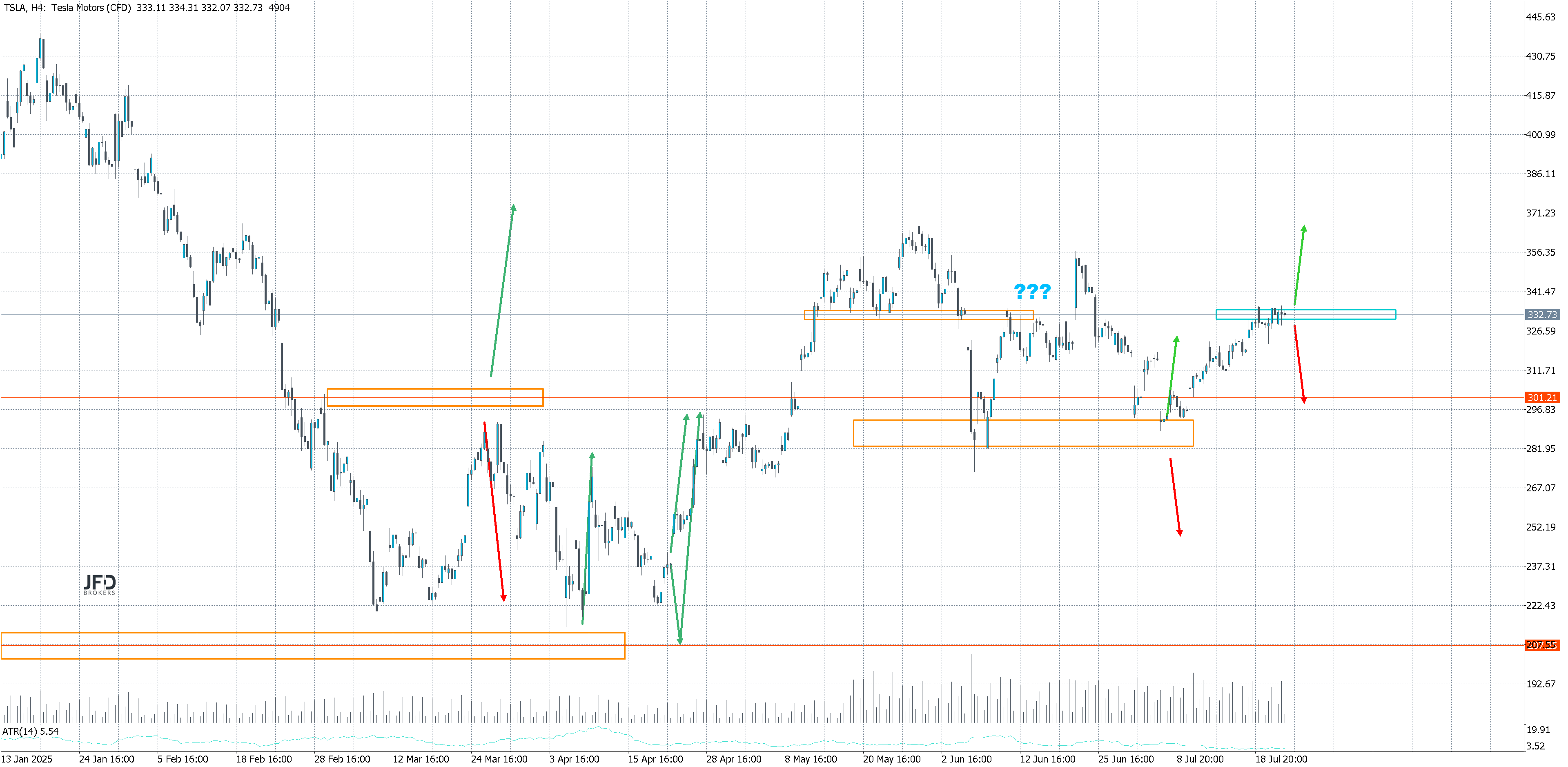
The earnings released yesterday perfectly illustrate this dynamic: Tesla missed expectations on both earnings and revenue – marking its second consecutive quarterly profit decline, with deliveries down 13.5%.
As a result, not only Tesla but also a wide range of growth stocks came under pressure. The market is beginning to question whether the long-standing enthusiasm that has fueled Tesla is fading – especially given weak numbers despite price cuts and new product variants.
Elon Musk’s attempt to reignite optimism with plans to expand the company’s robotaxi service was met with skepticism. Investors are no longer responding to bold visions alone – they want concrete results. A clear shift in sentiment from years past.
Tesla remains in the spotlight partly because it’s heavily held by retail traders, ETFs, and momentum-driven funds. When Tesla falls, it shakes investor confidence – not just in the company, but in the broader market structure.
What this means for traders: Tesla often acts as a catalyst. Weak performance drags down other growth names, while strong results can fuel risk-on rallies.
In that sense, Tesla is a signal for much more than autos – it’s about market psychology, faith in the future, and momentum. Yesterday’s earnings shook that faith. The question now is: how much confidence remains, and are markets still willing to bet on Elon Musk’s vision?
Disclaimer:
The content we produce does not constitute investment advice or investment recommendation (should not be considered as such) and does not in any way constitute an invitation to acquire any financial instrument or product. The Group of Companies of JFD, its affiliates, agents, directors, officers or employees are not liable for any damages that may be caused by individual comments or statements by JFD analysts and assumes no liability with respect to the completeness and correctness of the content presented. The investor is solely responsible for the risk of his investment decisions. Accordingly, you should seek, if you consider appropriate, relevant independent professional advice on the investment considered. The analyses and comments presented do not include any consideration of your personal investment objectives, financial circumstances or needs. The content has not been prepared in accordance with the legal requirements for financial analyses and must therefore be viewed by the reader as marketing information. JFD prohibits the duplication or publication without explicit approval.
There are risks involved with trading of cash equities. Past performance is not indicative of future results. You should consider whether you can tolerate such losses before trading. Please read the full Risk Disclosure (https://www.jfdbrokers.com/en/legal/risk-disclosure).
Copyright 2024 JFD Group Ltd.