

1. Monetary Policy and Interest Rate Decisions
-
We are in no hurry to change current rates.
-
We have reached a point where we can either ease or maintain a clearly restrictive policy.
-
Overall, people have made similar forecasts as last time, and it is difficult to predict how this will unfold.
-
Policy can move in the direction we desire.
-
It is appropriate to wait for further clarity, and the cost of waiting is very low.
-
If an inflationary impulse disappears on its own, tightening monetary policy is not the right response.
-
If the Fed’s goals need to be weighed against each other, it can be a challenge; however, this is not the case at present.
2. Inflation and Tariffs
-
Inflation remains around 2%, with tariffs contributing to an increase.
-
The strong inflation rates for goods over the past two months, if they persist, must be related to tariffs.
-
Tariffs tend to reduce growth and increase inflation.
-
Whether the higher inflation in goods during the first two months of the year is due to tariffs will become clear in a few months.
-
Looking for direct evidence of whether certain parts of inflation are caused by tariffs or not.
-
It will be difficult to determine what portion of inflation is due to tariffs. Goods inflation has risen, and while it is difficult to directly link this to tariff increases, tariffs are clearly a factor.
-
It is too early to say whether it is appropriate to factor in the effects of tariff inflation.
-
This will depend on whether tariff inflation progresses rapidly and whether inflation expectations remain well-anchored.
-
The base case is that there is no policy signal from tariffs, but this is uncertain.
-
There is inertia in changing forecasts given high uncertainty.
-
The Fed’s stagnant forecasts for core inflation this year are partly due to tariffs.
-
Inflation in housing services has performed well and has declined in a positive way.
-
The baseline scenario assumes that inflation will be temporary and depends on inflation expectations remaining anchored.
-
I do not agree with rising short-term inflation expectations, but there is no sign of an increase in long-term expectations.
-
Long-term inflation expectations remain largely well-anchored; we will monitor them closely.
-
We were approaching price stability, but with the introduction of tariff inflation, further progress will be delayed.
3. Economic Outlook and Market Sentiment
-
Sentiment has declined, but the economy appears to be healthy.
-
People are dissatisfied, and they are not wrong to say that prices have risen sharply.
-
The decline in sentiment is partly due to major political changes by the government.
-
In general, forecasts indicate weaker growth and higher inflation, requiring different responses that offset each other.
-
Whether soft data actually turns into hard data will become clear very quickly, but we have not seen this yet.
-
The Fed wants to focus on hard data.
-
The Fed is watching for lasting, significant changes in financial conditions.
-
Policymakers have significantly raised their assessment of risks to the Fed’s objectives.
-
While the probability of a recession has increased slightly according to forecasters, it is not very high.
4. Balance Sheet & Liquidity
-
There was strong support for slowing down balance sheet reduction.
-
This was a good time to slow down balance sheet reduction.
-
We have stated that we will stop reducing the balance sheet slightly above the sufficient level.
-
We are still far from that level and will approach it more slowly.
-
The inflows and outflows of the Treasury General Account (TGA) led us to reconsider balance sheet reductions.
5. Labor Market & Employment
-
Both hiring rates and layoff rates are low; a significant rise in layoffs would likely lead to unemployment quickly, but overall, the labor market is balanced.
-
Layoffs are significant for those affected but not on a national level.
Summary
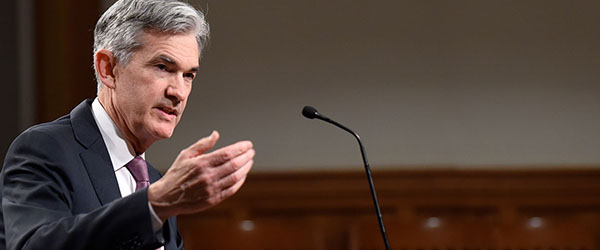
Powell’s remarks suggest that the Fed is in a wait-and-see mode and sees no urgency to adjust interest rates amid continued high uncertainty. Inflation remains a key focus, with tariffs contributing to rising prices, but long-term expectations remain stable. The Fed is monitoring declining sentiment but still views the economy as solid, with no immediate risk of recession. There is broad consensus on slowing the pace of balance sheet reduction, and the labor market remains stable, though policymakers remain cautious about future risks.
------------------------------------------------------------------
Disclaimer:
The content we produce does not constitute investment advice or investment recommendation (should not be considered as such) and does not in any way constitute an invitation to acquire any financial instrument or product. The Group of Companies of JFD, its affiliates, agents, directors, officers or employees are not liable for any damages that may be caused by individual comments or statements by JFD analysts and assumes no liability with respect to the completeness and correctness of the content presented. The investor is solely responsible for the risk of his investment decisions. Accordingly, you should seek, if you consider appropriate, relevant independent professional advice on the investment considered. The analyses and comments presented do not include any consideration of your personal investment objectives, financial circumstances or needs. The content has not been prepared in accordance with the legal requirements for financial analyses and must therefore be viewed by the reader as marketing information. JFD prohibits the duplication or publication without explicit approval.
There are risks involved with trading of cash equities. Past performance is not indicative of future results. You should consider whether you can tolerate such losses before trading. Please read the full Risk Disclosure (https://www.jfdbrokers.com/en/legal/risk-disclosure).
Copyright 2024 JFD Group Ltd.