


Rising tensions between the United States and Iran have recently pushed oil prices to a six-month high. For WTI in particular, markets are focused on how vulnerable supply could become in the event of a broader escalation.
Geopolitical tensions between the United States and Iran have had a noticeable impact on oil markets in recent weeks, pushing prices higher. WTI is trading at elevated levels in this environment, supported by growing concerns over potential supply risks in the Middle East. Market participants are reacting sensitively to any signs of escalation, as even limited disruptions could have significant consequences for the global balance between supply and demand.
Despite years of sanctions, Iran continues to play a meaningful role in the global oil market. With production of roughly 3.3 million barrels per day, the country accounts for about three percent of global oil supply. Historically, Iran was once among the world’s most important producers, but it permanently lost influence following the 1979 revolution and decades of underinvestment.
Today, Iran ranks as the fourth-largest oil producer within OPEC, with much of its exports moving through unofficial and opaque trading channels. The majority of Iranian crude is shipped to China, typically at steep discounts to international benchmarks. These flows could come under pressure if tensions with the United States intensify further.
For WTI, however, the primary issue is less about Iran’s direct production and more about the broader geopolitical risk premium. Central to this risk is the Strait of Hormuz, one of the most critical transit routes for global crude oil. Approximately a quarter of the world’s seaborne oil passes through this narrow chokepoint each day.
Any serious disruption or blockade of the strait would have immediate consequences for global supply. Asian buyers would be particularly exposed, forcing markets to rapidly reprice geopolitical risk. In such a scenario, WTI - as a globally traded benchmark - could experience increased volatility and price movements as markets reassess geopolitical risk.
While countries such as Saudi Arabia and the United Arab Emirates have alternative pipeline routes, these options would be insufficient to fully offset a major disruption. As a result, geopolitical considerations may remain embedded in oil prices.
For Iran, oil remains a cornerstone of the domestic economy. Despite sanctions, the energy sector continues to contribute meaningfully to economic growth. Additional pressure on exports would therefore carry not only political but also severe economic consequences.
From a market perspective, this leaves WTI in a delicate balance. In the absence of a concrete escalation, further gains may remain limited. However, any military action or new trade restrictions could materially impact price dynamics, potentially increasing volatility in both directions. In an environment already defined by geopolitical uncertainty, oil remains highly sensitive and strongly driven by headlines. However, oil markets remain influenced by a range of additional factors, including global demand conditions, production decisions by major producers, inventory levels, and macroeconomic developments. In the absence of material supply disruption, prices may also stabilize or decline depending on broader market conditions.
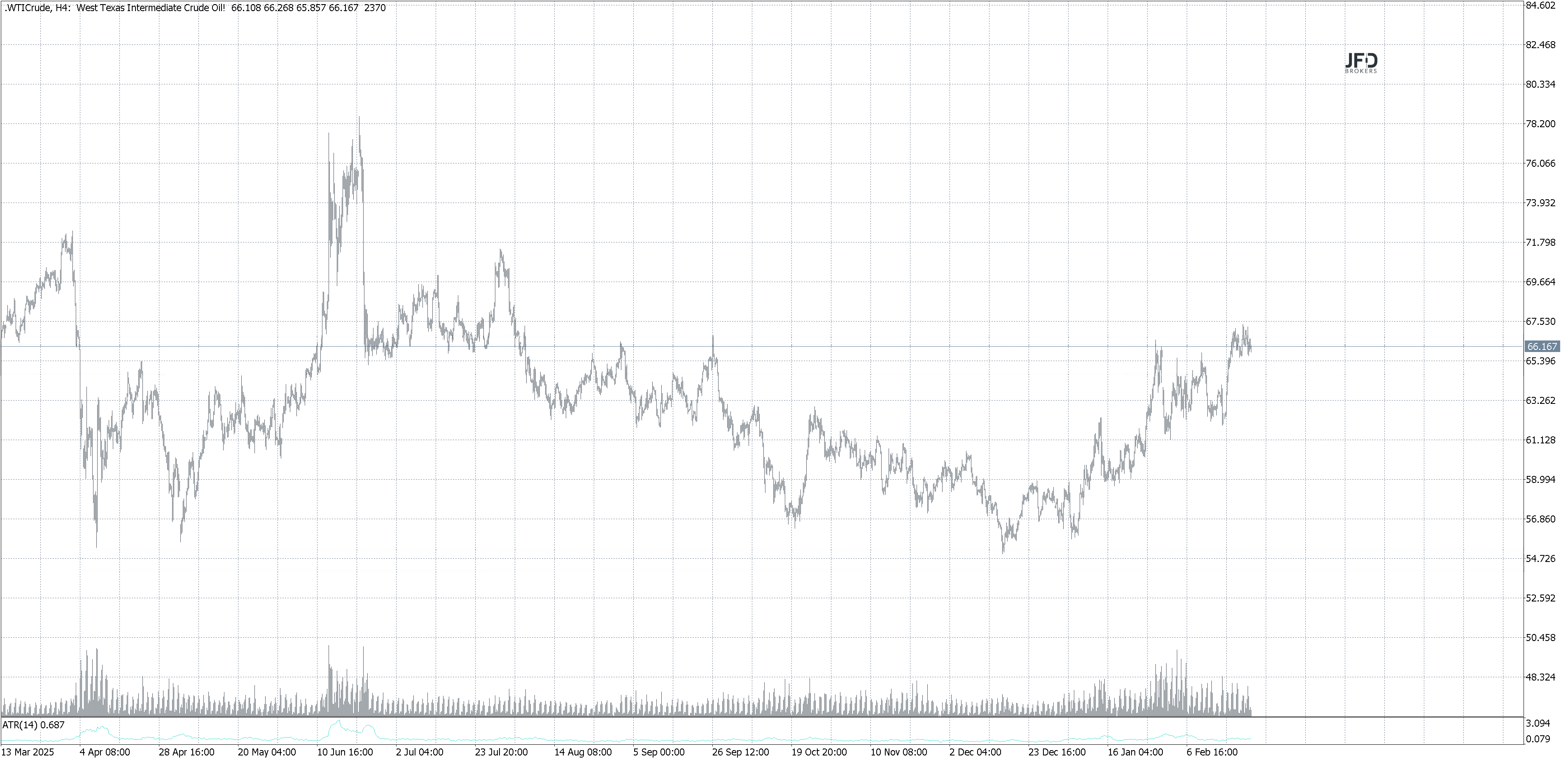
The chart is provided for illustrative purposes only and reflects hypothetical scenarios. It does not constitute a trading recommendation or investment advice.
Risk warning:
This is a marketing communication. The content is provided for informational purposes only and does not constitute investment advice, investment research, or a personal recommendation, nor should it be construed as an offer or solicitation to buy, sell, or hold any financial instrument. This communication has not been prepared in accordance with legal requirements designed to promote the independence of investment research.
The information presented does not take into account your individual investment objectives, financial situation, or needs. You should assess whether any investment is appropriate for you.
Investors are solely responsible for any investment decisions and should consider obtaining independent professional advice tailored on to their personal financial situation, investment objectives and risk tolerance before taking any investment decision. Duplication, distribution or publication of this content is prohibited without explicit approval.
59.18% of retail investor accounts lose money when trading CFDs with this provider. You should consider whether you understand how CFDs work and whether you can afford to take the high risk of losing your money.
Trading in cash equities involves risk. The value of investments may go down as well as up. Past performance is not a reliable indicator of future results. Please read the full Risk Disclosure available on our website.