


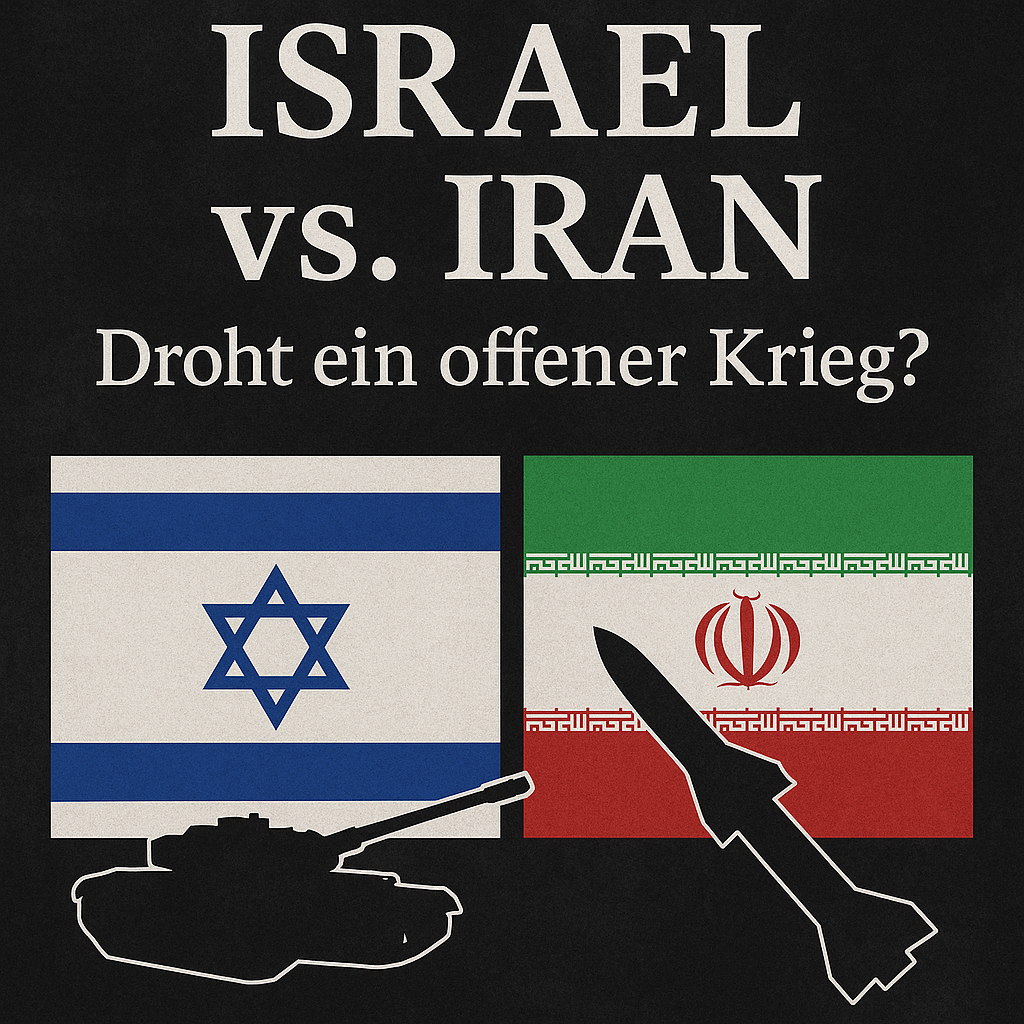
Israel vs. Iran: Is an Open War Looming?
For decades, Israel and Iran have been hostile toward each other. The conflict has long been shaped by covert actions – proxy attacks, espionage, and sabotage. But since the Hamas attack on Israel in October 2023, which Iran indirectly supported, the situation threatens to escalate.
In June 2025, Israel launched targeted strikes on Iranian military and nuclear facilities. According to Iranian sources, even a high-ranking general was killed. Israel then declared a state of emergency – a possible harbinger of open war?
Origins of Hostility
Until 1979, Israel and Iran were allies under Shah Pahlavi. But after the Islamic Revolution, the new regime declared Israel an enemy and began supporting anti-Israeli groups like Hamas and Hezbollah.
Nuclear Threat?
Israel sees a nuclear-armed Iran as an existential threat. That’s why it has previously bombed nuclear facilities in Iraq (1981) and Syria (2007). Iran denies seeking nuclear weapons but continues to enrich uranium.
Military Balance of Power
Israel is technologically superior – thanks in part to massive U.S. support. It possesses F-35 fighter jets, an efficient air defense system, and likely nuclear weapons. Iran, on the other hand, has a large number of drones, missiles, and an expanding cyber warfare capability – but mainly relies on asymmetric strategies.
Attacks & Escalations
In April 2024, Iran attacked Israel with over 300 rockets and drones – a direct retaliation for an alleged Israeli airstrike in Syria. Almost all were intercepted, but it marked the first open exchange of blows between the two states.
Later, targeted killings of high-ranking figures on both sides followed – including Hamas leader Haniyeh in Tehran. Such operations further escalate tensions.
A Strike on Iran’s Nuclear Facilities?
Such an attack would be risky: the facilities are dispersed, well protected, and partially underground. Even Israel’s modern air force would require aerial refueling to penetrate deep into Iran. Intelligence agencies warn that a strike would only delay the nuclear program – not stop it.
Allies & Proxies
Iran relies on Shiite militias in Lebanon, Iraq, and Yemen. Israel is supported by the U.S. and cooperates with Arab states that also view Tehran’s growing influence critically.
Disclaimer:
The content we produce does not constitute investment advice or investment recommendation (should not be considered as such) and does not in any way constitute an invitation to acquire any financial instrument or product. The Group of Companies of JFD, its affiliates, agents, directors, officers or employees are not liable for any damages that may be caused by individual comments or statements by JFD analysts and assumes no liability with respect to the completeness and correctness of the content presented. The investor is solely responsible for the risk of his investment decisions. Accordingly, you should seek, if you consider appropriate, relevant independent professional advice on the investment considered. The analyses and comments presented do not include any consideration of your personal investment objectives, financial circumstances or needs. The content has not been prepared in accordance with the legal requirements for financial analyses and must therefore be viewed by the reader as marketing information. JFD prohibits the duplication or publication without explicit approval.
There are risks involved with trading of cash equities. Past performance is not indicative of future results. You should consider whether you can tolerate such losses before trading. Please read the full Risk Disclosure (https://www.jfdbrokers.com/en/legal/risk-disclosure).
Copyright 2024 JFD Group Ltd.