


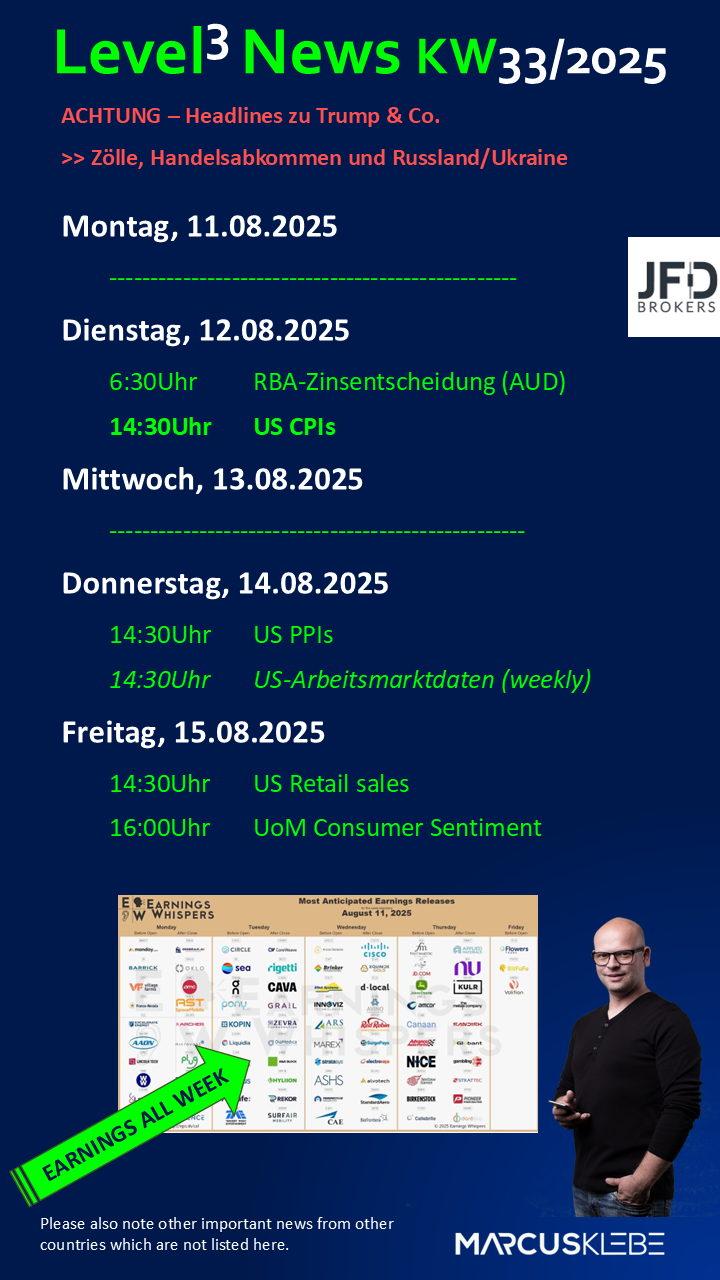
The CPI (Consumer Price Index) from the United States is one of the most important macroeconomic indicators, as it reflects the country’s inflation trends. It measures how the prices of goods and services change compared to the previous year. For the Federal Reserve (Fed), this data serves as a key compass for monetary policy decisions.
Right now, inflation is once again in the spotlight for the Fed. While it has eased somewhat in recent quarters, it remains stubbornly high in certain areas. This means that any deviation in the CPI data from market expectations can trigger significant market reactions. If the figures come in higher than expected, the likelihood increases that the Fed will keep interest rates elevated for longer or delay rate cuts. If they come in lower, markets may start pricing in an earlier monetary easing.
The interplay between inflation, interest rate policy, and economic growth is particularly sensitive at the moment. High rates help bring inflation down but can also slow economic growth and corporate earnings. This is why traders and investors watch every CPI release with such close attention.
In addition to the headline CPI, which includes all goods and services, the Fed pays special attention to the core CPI, which excludes volatile energy and food prices. This core measure provides a clearer picture of the underlying inflation trend.
Currently, markets are in a state where even small data surprises can cause sharp price swings in both equities and bonds. The reason: The Fed has made it clear that its policy decisions will be highly data-dependent. CPI data, therefore, is a key driver for short-term market sentiment and the medium-term path of monetary policy.
For traders, CPI release days are often among the most volatile of the month. The data can instantly confirm or reverse trends, create liquidity spikes, and trigger stop-loss orders. That’s why anyone trading on CPI day must be fully aware of both the significance and the risk.
Disclaimer:
The content we produce does not constitute investment advice or investment recommendation (should not be considered as such) and does not in any way constitute an invitation to acquire any financial instrument or product. The Group of Companies of JFD, its affiliates, agents, directors, officers or employees are not liable for any damages that may be caused by individual comments or statements by JFD analysts and assumes no liability with respect to the completeness and correctness of the content presented. The investor is solely responsible for the risk of his investment decisions. Accordingly, you should seek, if you consider appropriate, relevant independent professional advice on the investment considered. The analyses and comments presented do not include any consideration of your personal investment objectives, financial circumstances or needs. The content has not been prepared in accordance with the legal requirements for financial analyses and must therefore be viewed by the reader as marketing information. JFD prohibits the duplication or publication without explicit approval.
There are risks involved with trading of cash equities. Past performance is not indicative of future results. You should consider whether you can tolerate such losses before trading. Please read the full Risk Disclosure (https://www.jfdbrokers.com/en/legal/risk-disclosure).
Copyright 2024 JFD Group Ltd.