


Forex – Why the Currency Market Has Fascinated Traders for Decades
The foreign exchange market, commonly known as Forex, is the largest and most liquid financial market in the world. Every day, trading volumes exceed those of all other asset classes combined. Yet its sheer size alone does not explain why traders have been drawn to currencies for decades.
The true appeal of the Forex market lies in its structure – and in what it reflects about the global economy.
>> NEUE Webinar-Serie - Auch für FOREX-Trader: HIER anmelden!
Currencies Are Relative Prices
Unlike equities or commodities, currencies are not standalone assets.
They always exist in relation to one another.
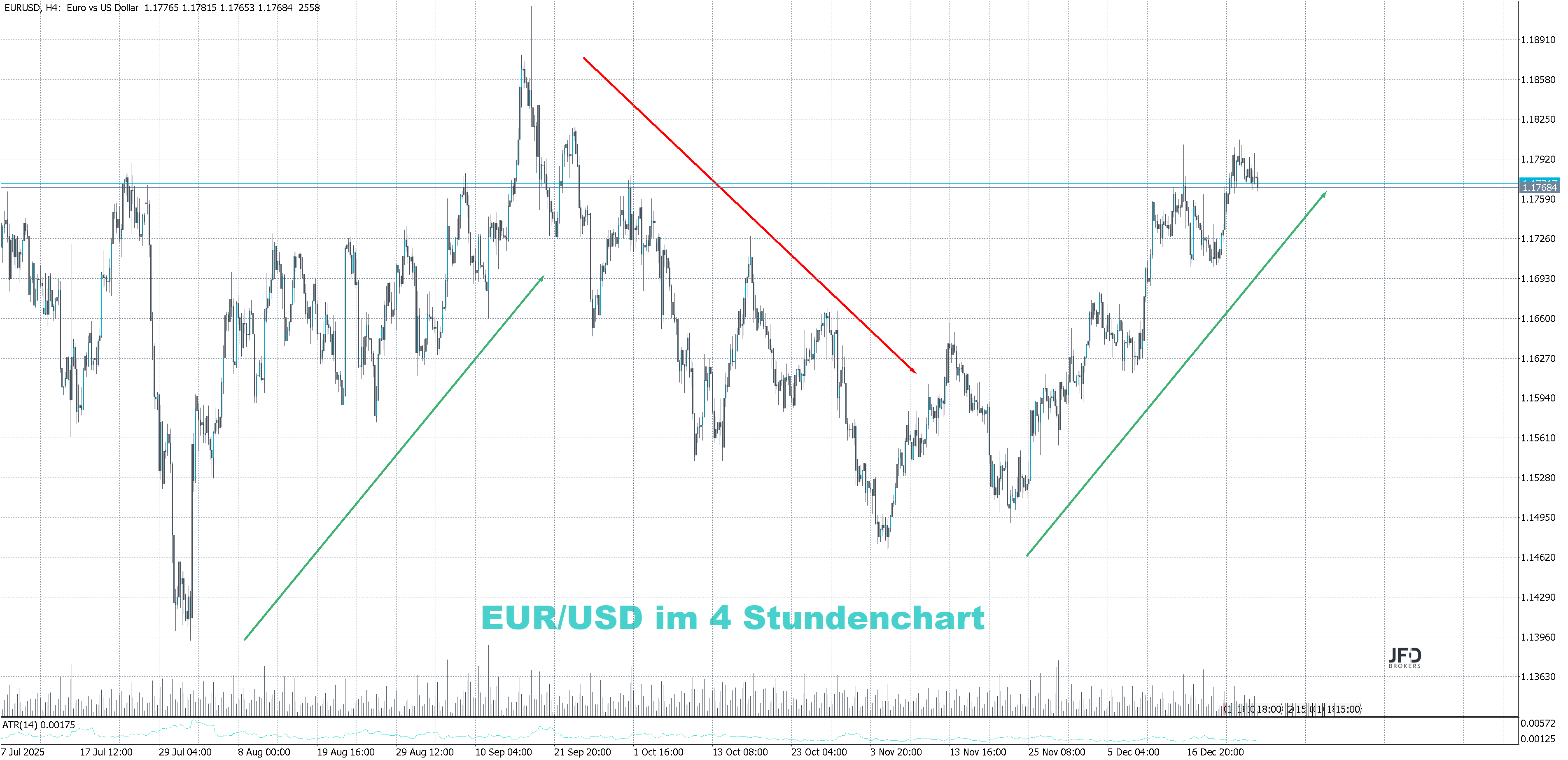
A currency pair such as EUR/USD does not represent the isolated performance of the euro or the US dollar. Instead, it reflects a comparison between two economies, including:
-
economic strength
-
monetary policy
-
capital flows
-
growth expectations
Trading Forex therefore means evaluating relative advantages and disadvantages between currency areas. This is what makes the market intellectually demanding – and analytically rewarding.
The Forex Market Is Driven by Macroeconomics
While equity markets are heavily influenced by corporate earnings and sector-specific developments, the foreign exchange market is primarily shaped by macroeconomic forces.
Key drivers include:
-
monetary policy and interest rate expectations
-
inflation and economic growth
-
labor markets and productivity
-
current accounts and capital flows
-
geopolitical risks
Crucially, it is not the data itself that moves markets, but expectations.
An interest rate decision that matches forecasts often has little impact.
Even small deviations from expectations, however, can trigger significant price movements.
Forex is therefore less a market of facts and more a market of interpretation.
Why Forex Often Reacts Early
The currency market frequently anticipates macroeconomic developments earlier than other asset classes. Institutional investors hedge international exposure through currencies and reallocate capital between regions well before changes become visible in economic data.
As a result, Forex often signals:
-
shifts in growth expectations
-
rising or falling recession risks
-
upcoming turning points in monetary policy
For attentive traders, the currency market can serve as an early indicator of global economic change.
High Efficiency – but Not Random
Forex is widely regarded as one of the most efficient financial markets in the world.
At the same time, it is far from random.
High liquidity leads to:
-
smoother price movements
-
tight spreads in major currency pairs
-
clearly defined reactions around key price levels
Market moves do not occur because indicators “work”, but because liquidity is sought, absorbed, and redistributed. Especially on higher timeframes, this creates structured trends and well-defined areas of interest.
Why Forex Is Especially Attractive for Active Traders
For active traders, the Forex market offers several advantages:
-
near 24-hour trading access
-
deep liquidity in major currency pairs
-
clear responses to monetary policy developments
-
strong alignment with macroeconomic analysis
At the same time, the market is unforgiving.
Those who trade without understanding the broader context, or who rely solely on short-term signals, eventually lose their edge.
Consistent success in Forex requires:
-
a solid macroeconomic foundation
-
the ability to correctly interpret expectations
-
patience to wait for clear market conditions
This balance of complexity, structure, and transparency is what continues to make the Forex market so compelling for traders worldwide.
Disclaimer:
The content we produce does not constitute investment advice or investment recommendation (should not be considered as such) and does not in any way constitute an invitation to acquire any financial instrument or product. The Group of Companies of JFD, its affiliates, agents, directors, officers or employees are not liable for any damages that may be caused by individual comments or statements by JFD analysts and assumes no liability with respect to the completeness and correctness of the content presented. The investor is solely responsible for the risk of his investment decisions. Accordingly, you should seek, if you consider appropriate, relevant independent professional advice on the investment considered. The analyses and comments presented do not include any consideration of your personal investment objectives, financial circumstances or needs. The content has not been prepared in accordance with the legal requirements for financial analyses and must therefore be viewed by the reader as marketing information. JFD prohibits the duplication or publication without explicit approval.
There are risks involved with trading of cash equities. Past performance is not indicative of future results. You should consider whether you can tolerate such losses before trading. Please read the full Risk Disclosure (https://www.jfdbrokers.com/en/legal/risk-disclosure).
Copyright 2024 JFD Group Ltd.