


Exchange Traded Funds (ETFs), which follow the performance of certain asset classes, can be a good solution for those, who wish to diversify their portfolio, with the help of only a few instruments. JFD Group now offers a solution for such investors and traders, who can take advantage in the moves of the ETFs offered below:
iShares Core DAX® UCITS ETF (DE) (DAXEX)
iShares Core MSCI EM IMI UCITS ETF (EIMI)
iShares Core S&P 500 ETF (IVV)
iShares MSCI China A UCITS ETF (CNYA)
iShares MSCI India UCITS ETF (NDIA)
iShares MSCI World ETF (URTH)
Taking a look at the technical picture of these ETFs, we can see that, after the severe sell-off in the end of February and the first half of March, all markets managed to recover a decent number of losses. Some even recovered all the losses and then ended up hitting new all-time highs.
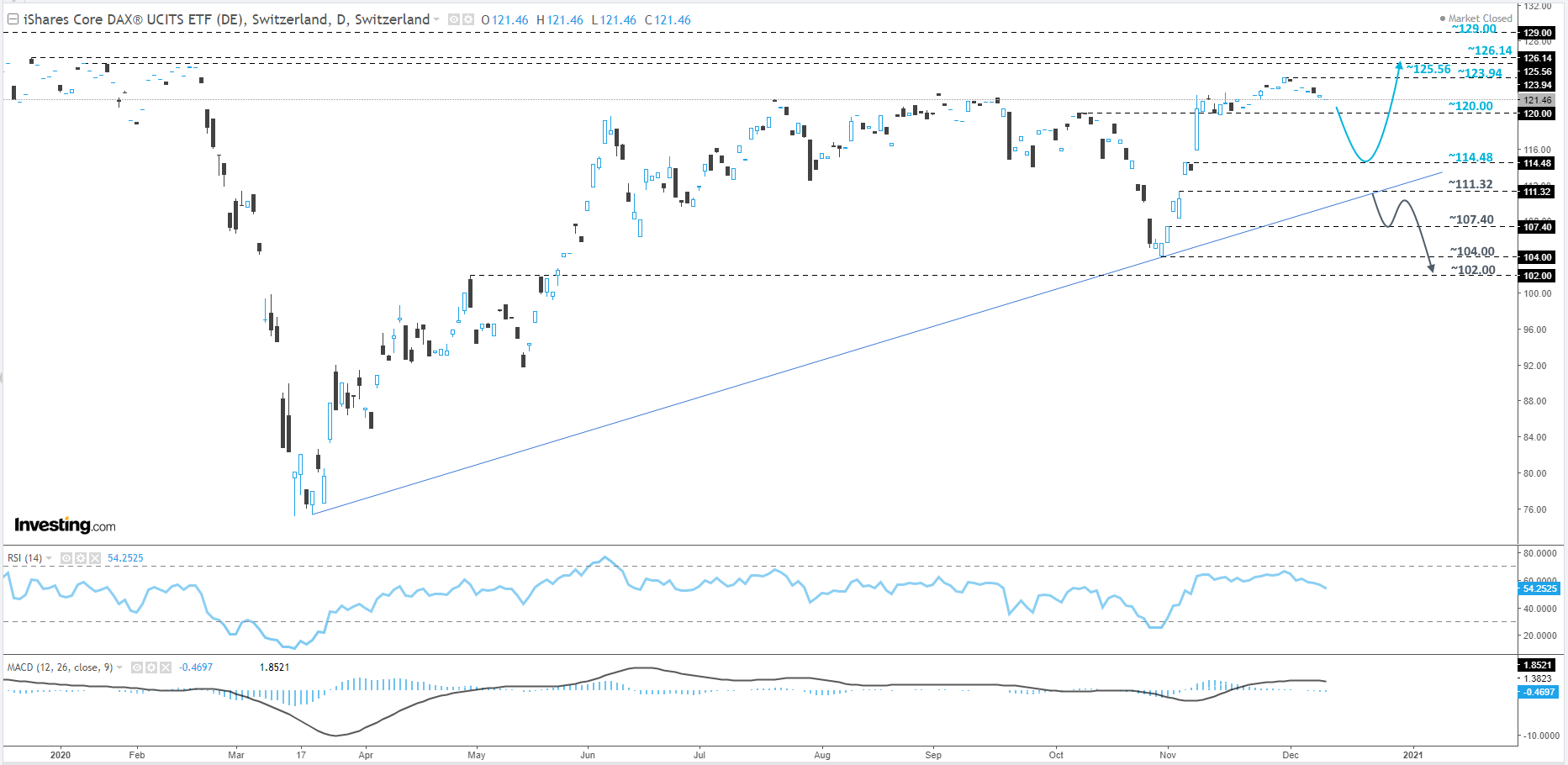
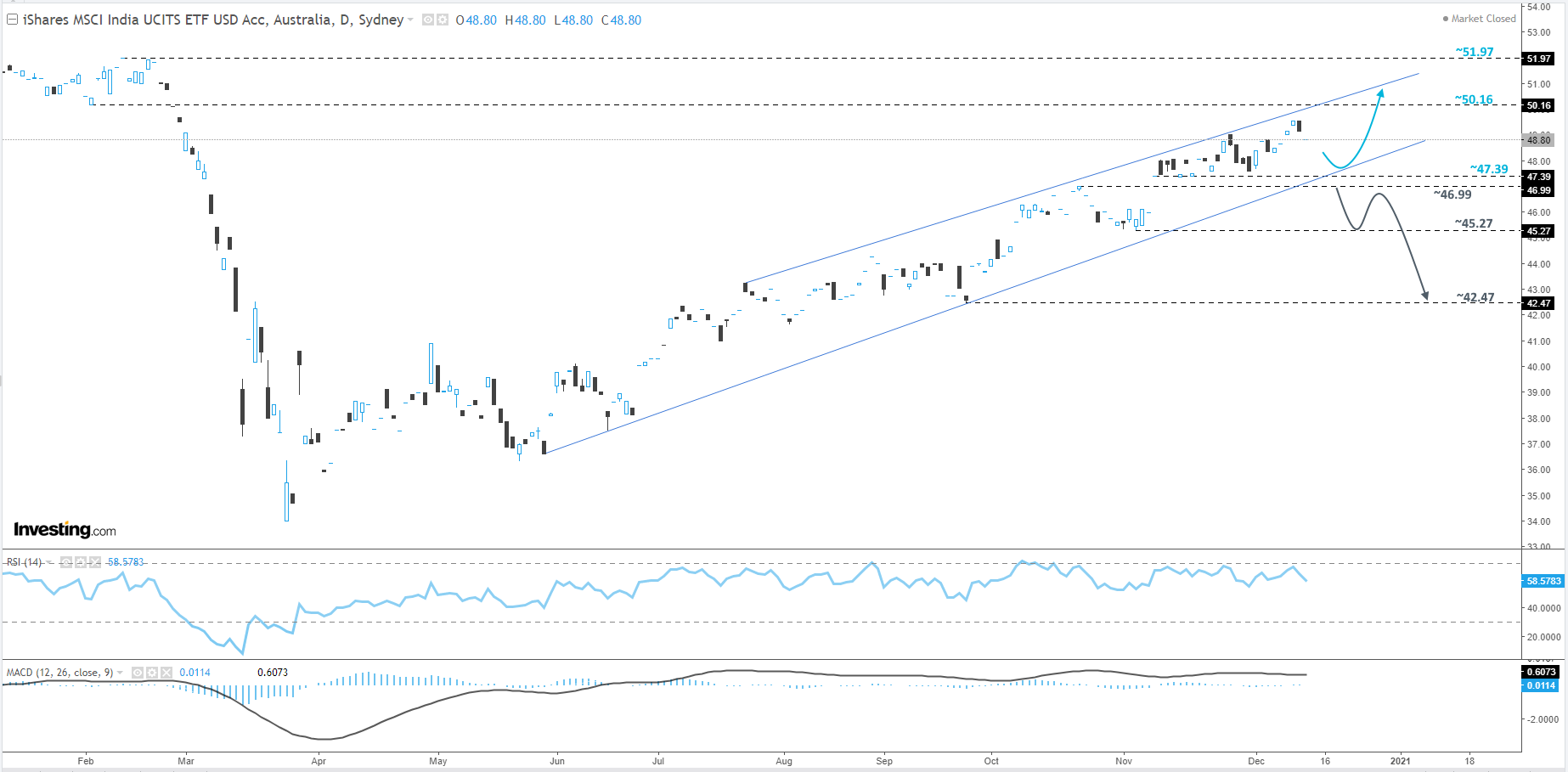
From the charts offered below, we can see that the two least performing markets were the German and Indian ones. Although DAXEX and NDIA showed good performances in the period between the end of March and the beginning of December, still, they were not able to get back to their January and February highs. However, DAXEX and NDIA are still trading above their medium-term tentative upside lines drawn from the low of March 19th and the low of May 27th respectively. Even if the two ETFs correct a bit lower, as long as those upside lines stay intact, they could still have a chance to make their ways back to the 2020 highs, or even above that. The highest point of 2020 for DAXEX is currently at 125.56, which if broken, may set the stage for a push to the highest point of 2019, at 126.14. If the buying doesn’t end there, the ETF may travel towards levels last seen in June and July of 2018. If NDIA also picks up a decent amount of buying interest, after the possible above-mentioned correction lower, that might help the price rise back to the low of February 4th, at 50.16, or to the highest point of February, at 51.97, which is also the current all-time high.
Alternatively, if the aforementioned upside lines get broken, that might change the direction of the current trend and send those two funds lower. DAXEX could end up sliding all the way back to the lowest point of October, at 104.00, or the highest point of April, at 102.00. If NDIA breaks its upside line, it may drift to the November low, at 45.27, or to the September low, at 42.57.
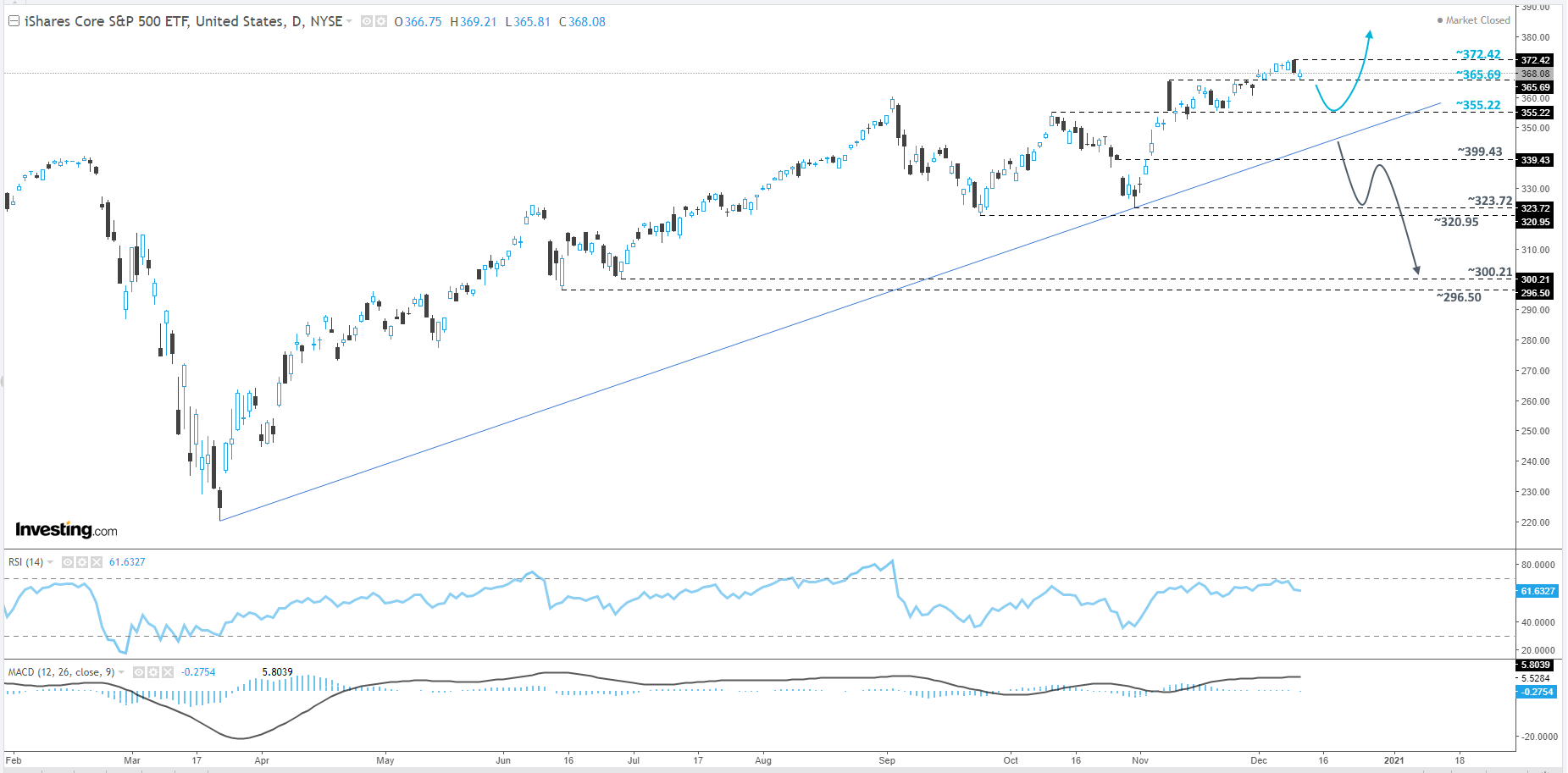
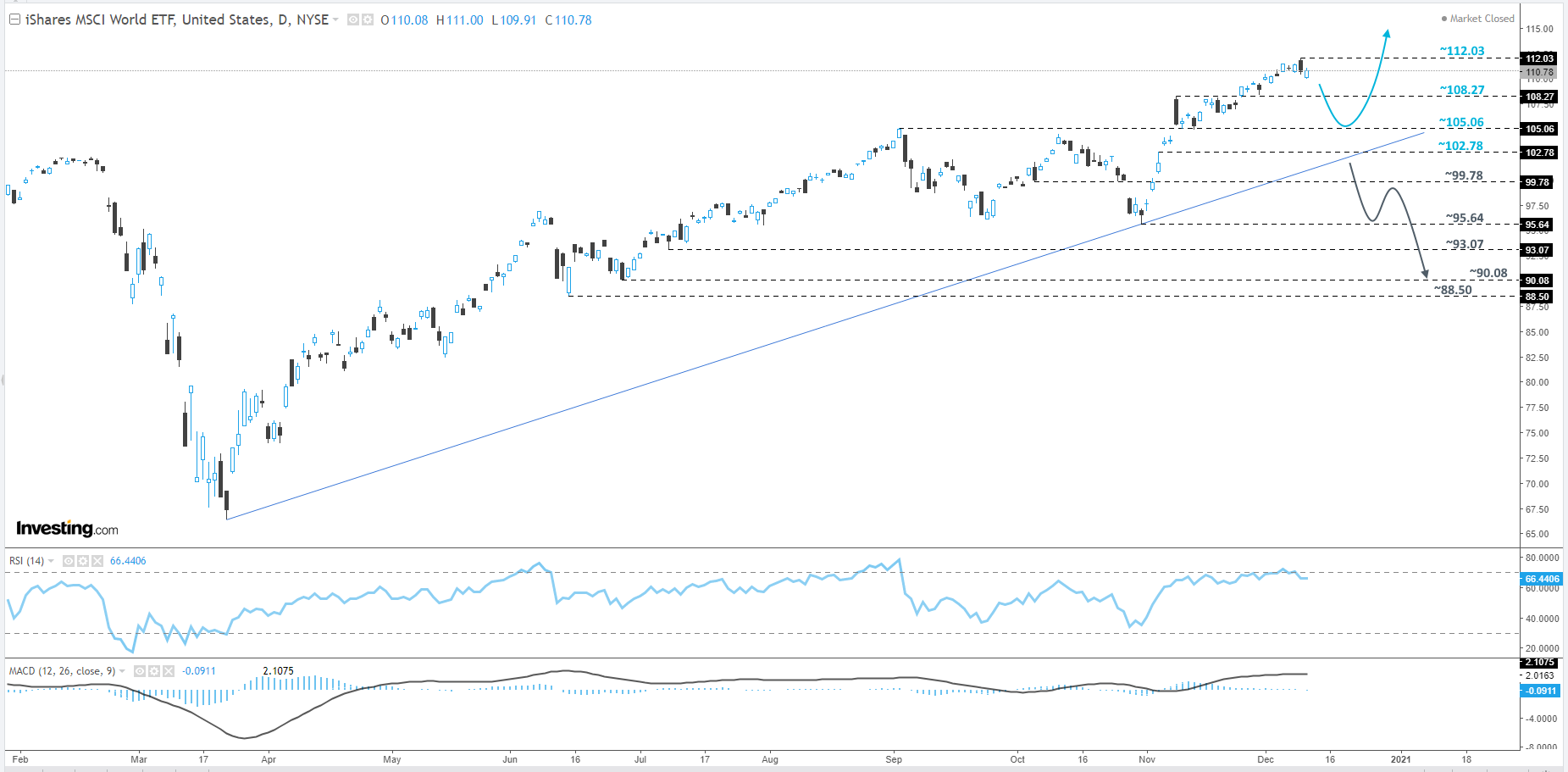
Talking about the technical pictures of the other 4 ETFs from the above-discussed list, all of them managed to recover the February/March losses, overcome their previous 2020 highs and establish new ones (except for CNYA, as its all-time high is set at 6.92). The benchmarks that those ETFs follow, showed strong resilience to the whole pandemic-related issues that took effect throughout 2020. Although we are now seeing some corrections to the downside, those could be end-of-the-year profit takings by investors.
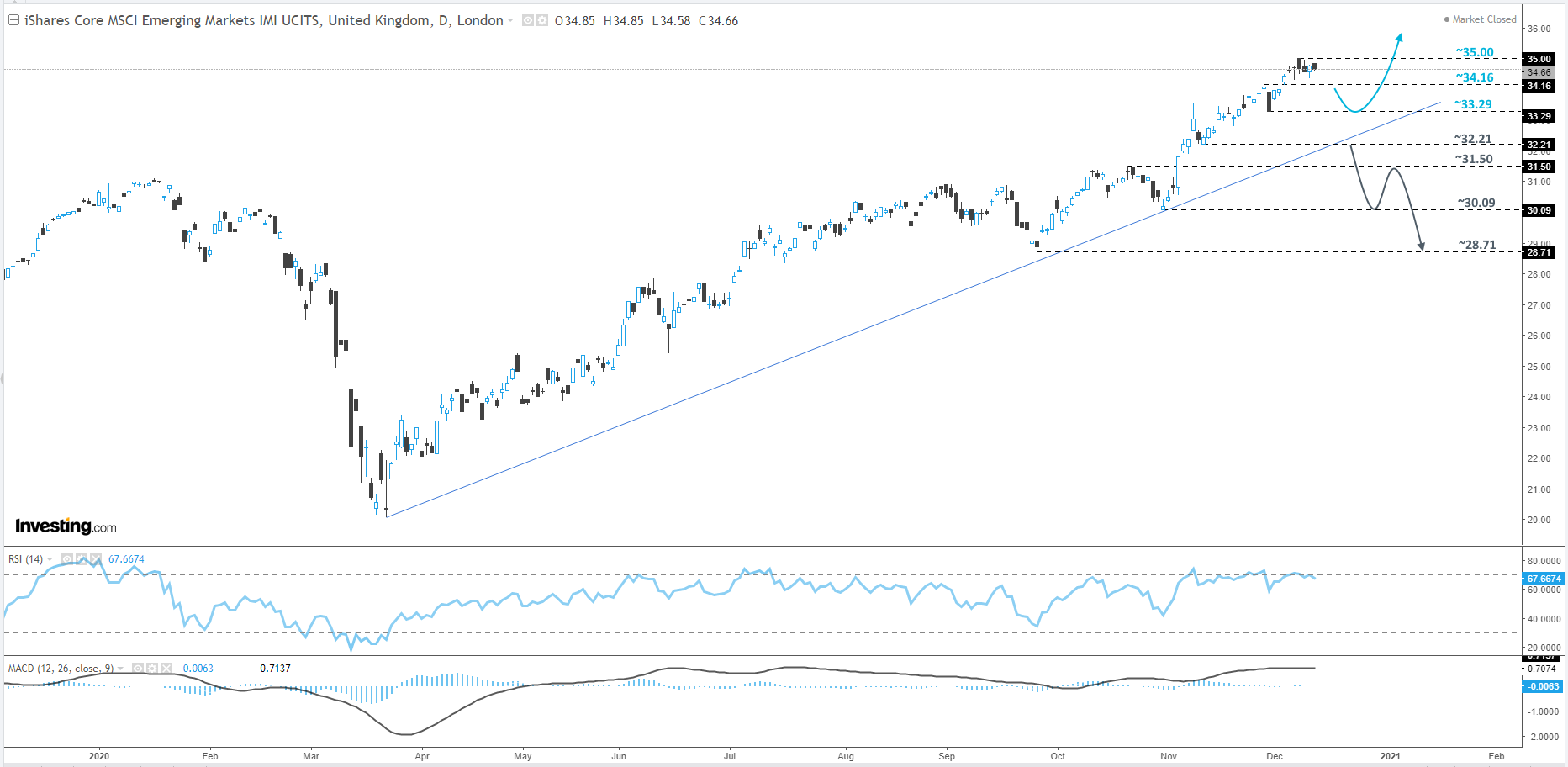
The IVV, URTH and EIMI funds show that they are currently trading well above their medium-term tentative upside lines, all drawn from the low of March 23rd. Although we could see a larger corrective move lower, if the areas near the above-mentioned upside lines continue to provide support, the buying may resume, as investors could take advantage of the lower prices. IVV might drift back to the 372.42 barrier, URTH could go to the 112.03 zone and EIMI may climb back to the 35.00 level, which are the all-time highs for those ETFs. If the buying is still strong, then a break of those hurdles would place the funds into the uncharted territories.
On the downside, similarly to DAXEX and NDIA, if the aforementioned upside lines of IVV, URTH and EIMI break, that may open the door for larger declines. IVV and URTH could slide to their June lows, near the 300.00 and 88.50 levels respectively. For EIMI we will initially aim for the area near its September low, at 28.71.
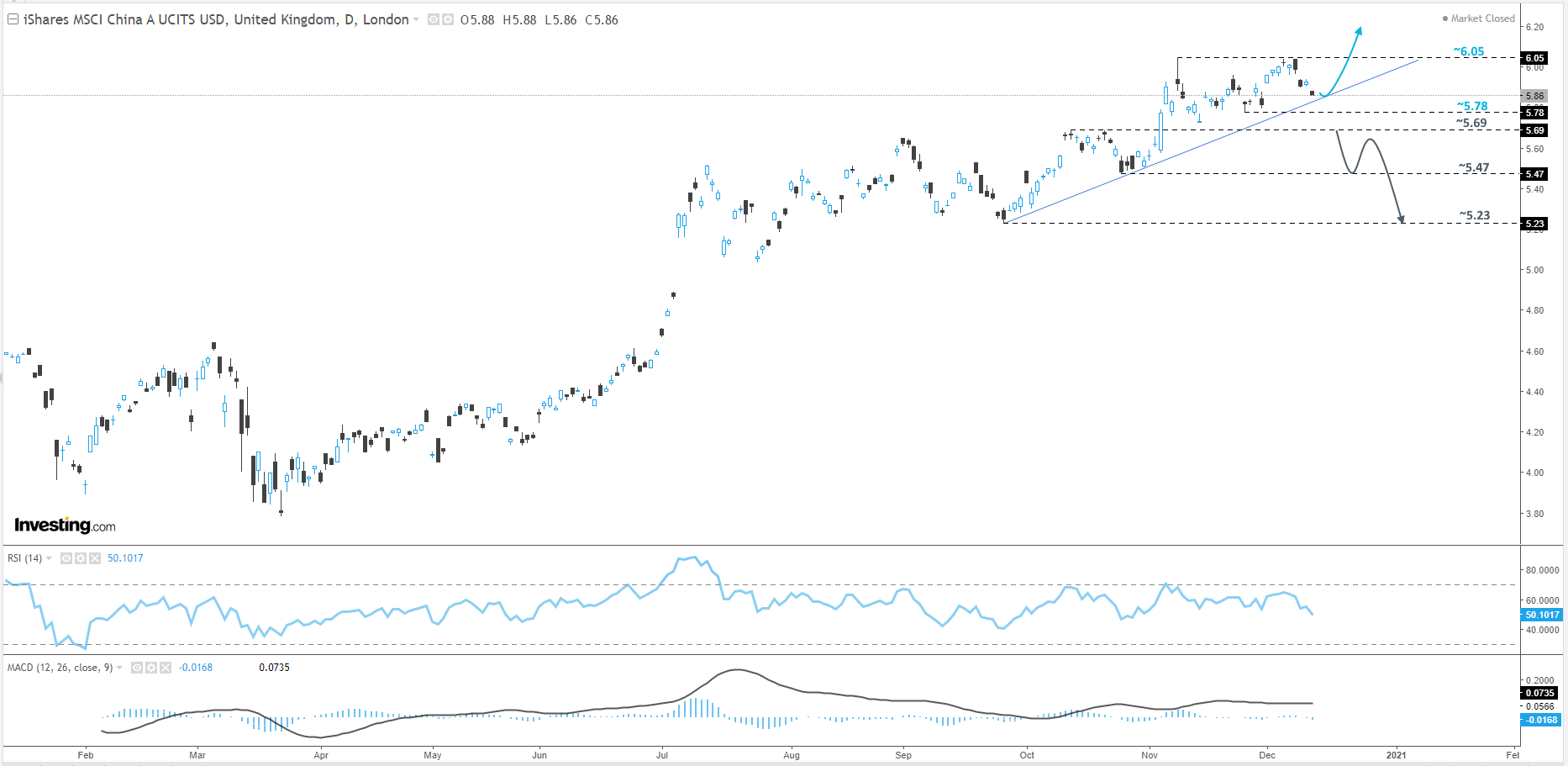
If we take a look at the CNYA’s technical picture, we will see that in the end of February and the beginning of March, it did not experience a major decline, unlike the other ETFs. But after the start of the end-of-March recovery, CNYA showed spectacular performance, as it rallied heavily. That said, the fund was still not able to reach its all-time high, at 6.92, which was tested back in May 2015. CNYA continues to move above a short-term upside support line taken from the low of September 25th. If that upside line continues to provide support, we may see a rebound, where the ETF might drift back to its current highest point of 2020, at 6.05. If that area gets broken, we will then aim for that all-time high, at 6.92.
Alternatively, if the previously-discussed upside line breaks, that may open the door for further declines, as some new buyers could stay away from entering for a while. CNYA could then end up sliding to the lowest point of September, at 5.23.
*** Source of data and charts: Investing.com
Disclaimer:
The content we produce does not constitute investment advice or investment recommendation (should not be considered as such) and does not in any way constitute an invitation to acquire any financial instrument or product. The Group of Companies of JFD, its affiliates, agents, directors, officers or employees are not liable for any damages that may be caused by individual comments or statements by JFD analysts and assumes no liability with respect to the completeness and correctness of the content presented. The investor is solely responsible for the risk of his investment decisions. Accordingly, you should seek, if you consider appropriate, relevant independent professional advice on the investment considered. The analyses and comments presented do not include any consideration of your personal investment objectives, financial circumstances or needs. The content has not been prepared in accordance with the legal requirements for financial analyses and must therefore be viewed by the reader as marketing information. JFD prohibits the duplication or publication without explicit approval.
Trading ETFs involves significant risk of loss and may not be suitable for all investors. Investments returns may fluctuate and are subject to market volatility. Past performance is not indicative of future results. You should consider whether you can tolerate such losses before trading. Please read the full Risk Disclosure.
Copyright 2020 JFD Group Ltd.